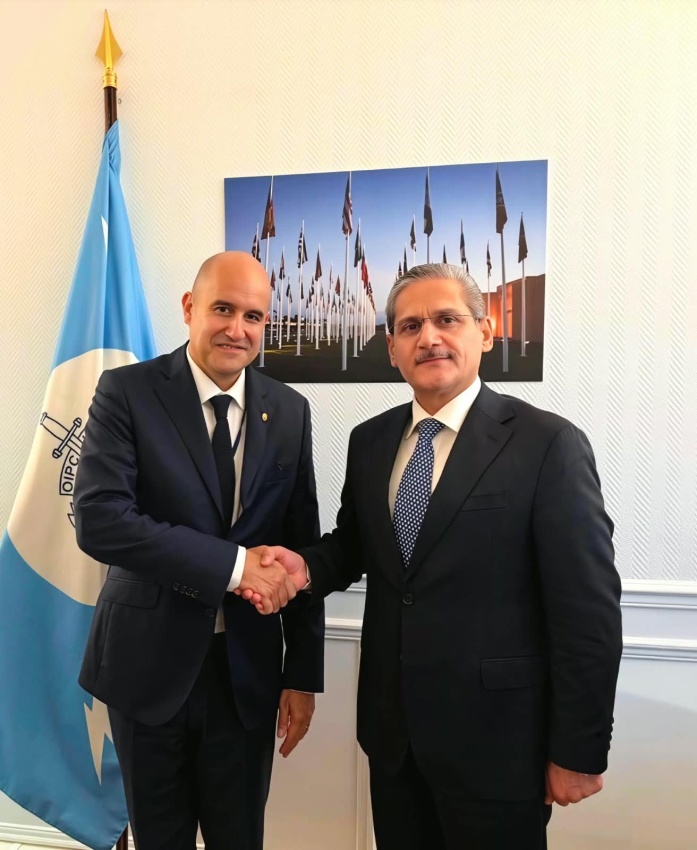
mniraq - The Chairman of the Federal Integrity Commission, Mohammed Ali Al-Lami, discussed with the President of the International Criminal Police Organization (Interpol), Lukas Filipp, on Monday (September 14, 2026), ways to enhance international cooperation to pursue those wanted in corruption cases and prevent them from taking other countries as havens to escape justice.
According to a statement by the Integrity Commission, the meeting was held on the sidelines of Al-Lami's participation within the government delegation accompanying Prime Minister Ali Falih Al-Zaidi on his visit to France, where the two sides discussed developing cooperation mechanisms, activating direct communication and coordination channels regarding wanted persons, as well as accelerating the exchange of information necessary to track and pursue them.
Al-Lami affirmed that the cross-border nature of corruption crimes, along with associated money smuggling and the movement of wanted persons between countries, makes international cooperation a fundamental pillar in combating them, stressing the need to prevent the exploitation of borders or differences in systems and legislations to escape legal prosecution.
He pointed out that tightening pursuit, investigation and inquiry procedures in Iraq has pushed some of those involved to attempt to leave the country and seek refuge outside its borders, which requires rapid international response and effective coordination with Interpol and counterpart agencies to determine the whereabouts of wanted persons and take legal measures against them.
Al-Lami also called for enhancing Interpol's support for Iraq's efforts in combating corruption, pursuing wanted persons and recovering the proceeds of their crimes, stressing that confronting cross-border corruption requires an effective international partnership that prevents providing any safe haven for the corrupt.
The meeting also addressed mechanisms to accelerate the pursuit of wanted persons and the exchange of information, evidence and documents, in addition to activating contact points and direct coordination between the two sides, as well as enhancing the capabilities of Iraqi staff through specialized training programs and exchanging expertise in the field of pursuing wanted persons and recovering funds.
The two sides agreed to continue coordination and develop communication channels and exchange of information and expertise, in a manner that enhances the speed of response to files of those wanted in corruption cases and supports Iraq's efforts to recover funds and assets acquired from crimes.